
Underpinning by piers and shafts
Underpinning by piers and shafts
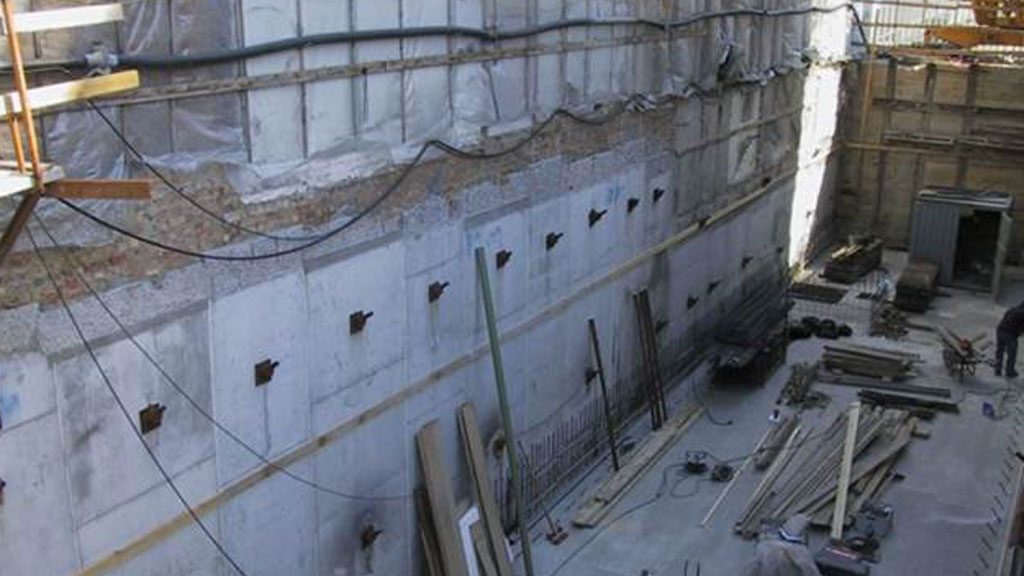
When excavating below or next to existing foundations, underpinning is required to keep the existing structure safe. For limited depths a masonry underpinning suffices; for greater depths the foundation is deepened using shored shafts in reinforced concrete. Both are carried out in alternating strips to preserve the building's stability throughout the work.
When to use
- Creating a new basement under an existing building
- Deepening foundations during renovations or when adding floors
- Stabilising under-capacity foundations (historical buildings or design defects)
- Combined retention and underpinning during construction of adjacent underground works
What we deliver
- Bearing capacity and redistribution analysis per phase to NBN EN 1997-1 (+ ANB)
- Masonry detailing (NBN EN 1996-2 ANB), reinforced (NBN EN 13670) or fibre-reinforced concrete
- Provisions to avoid load transfer to the new structure
Technical notes
- Not feasible below the water table — level at least 0.5 m below the excavation; dewatering if needed
- Wall toe at least 0.5 m below the excavation level; the existing foundation must have sufficient cohesion and integrity
- Settlements of 10 to 15 mm are normal even with careful execution — pre-loading the first phase keeps them lower
- Not directly applicable on isolated footings: combine with micropiles or jet-grout columns
- Full cycle per strip (excavation + underpinning + backfill) within a single day — soil cohesion contributes to stability
- Toe-depth tolerance ±5 cm; party walls require particular care (propping, lintel loads)
Related services 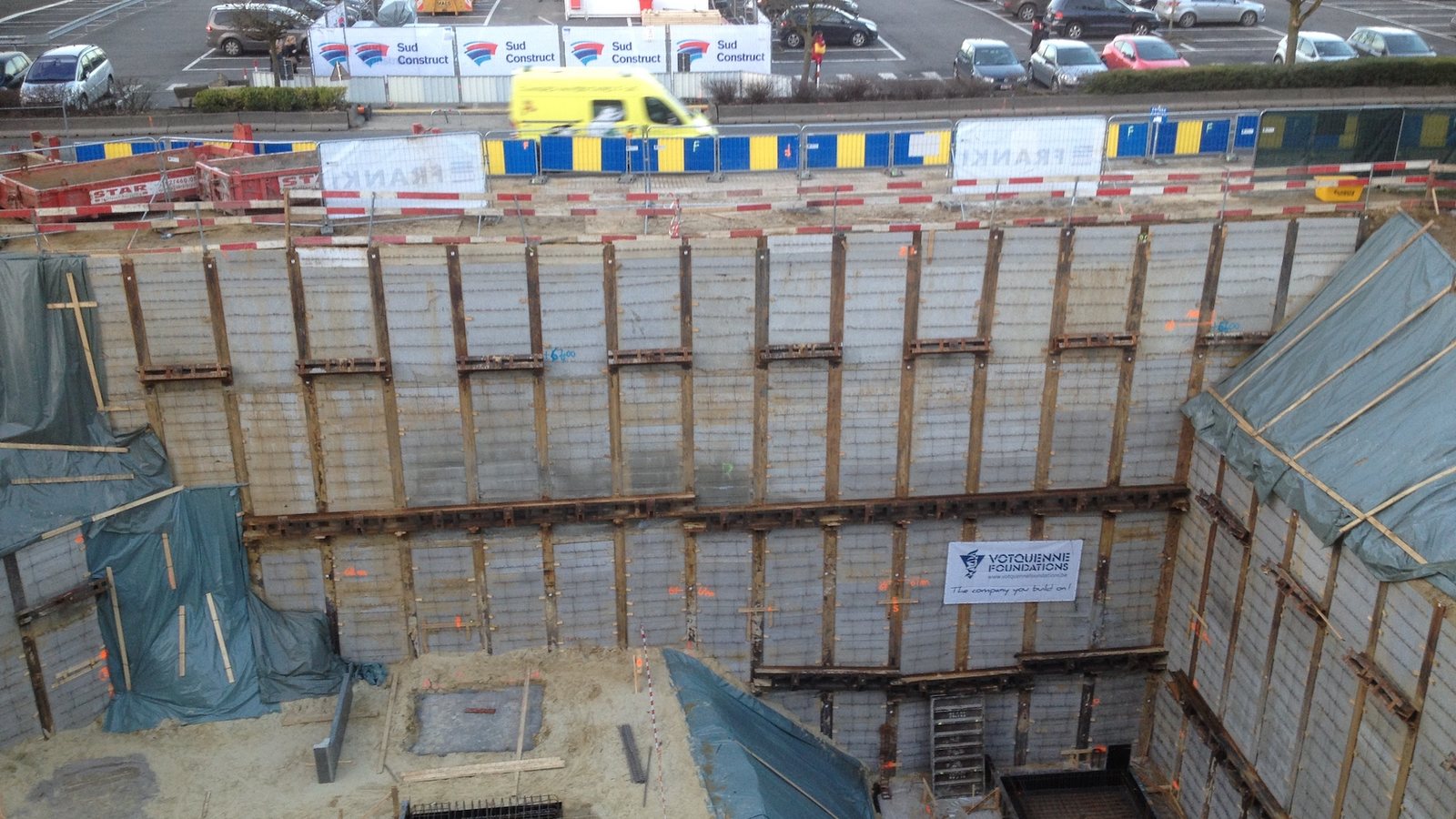
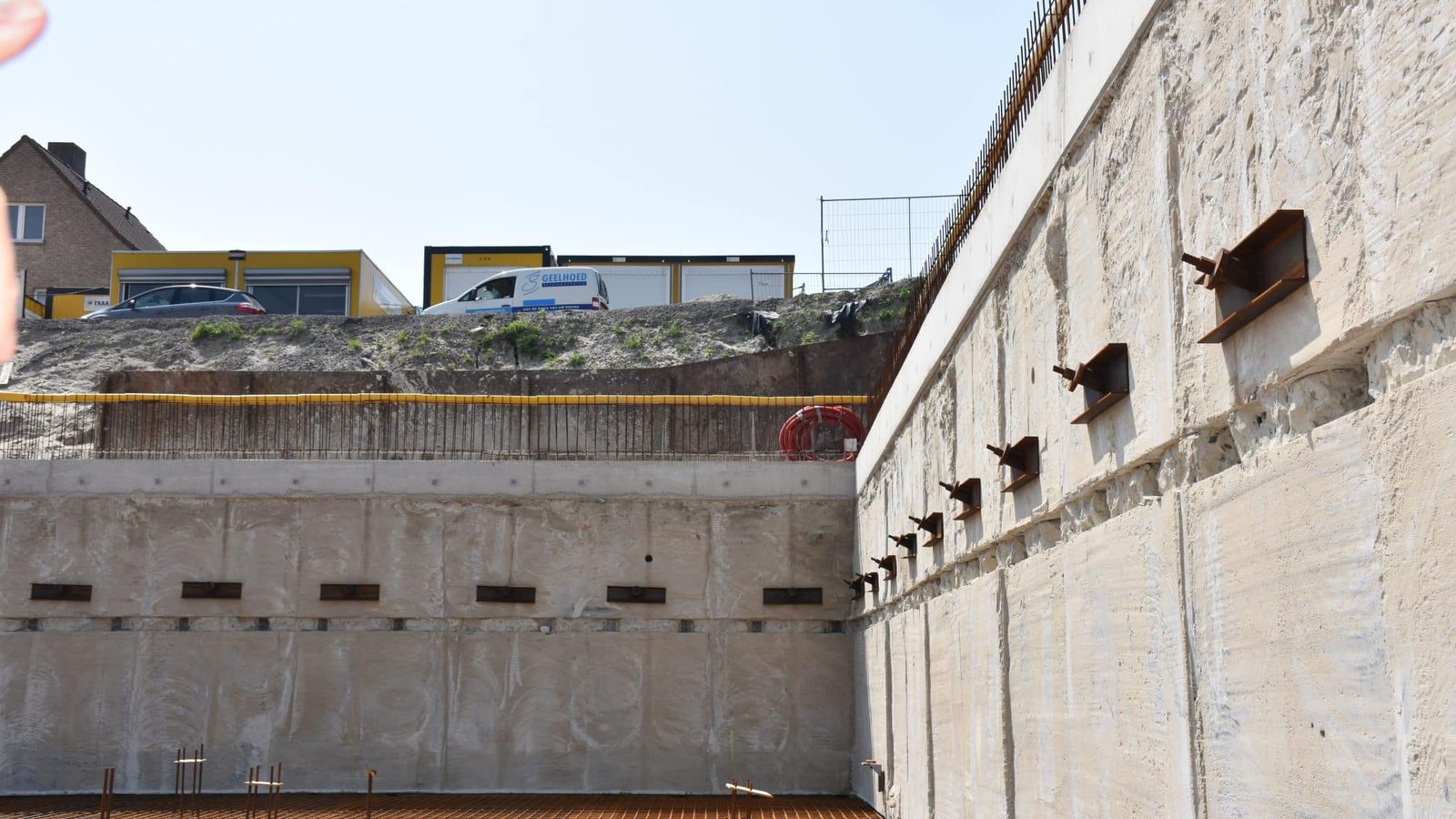
Soldier pile wall (Berlin wall)
Vertical steel soldier piles with timber, concrete or steel lagging between them.
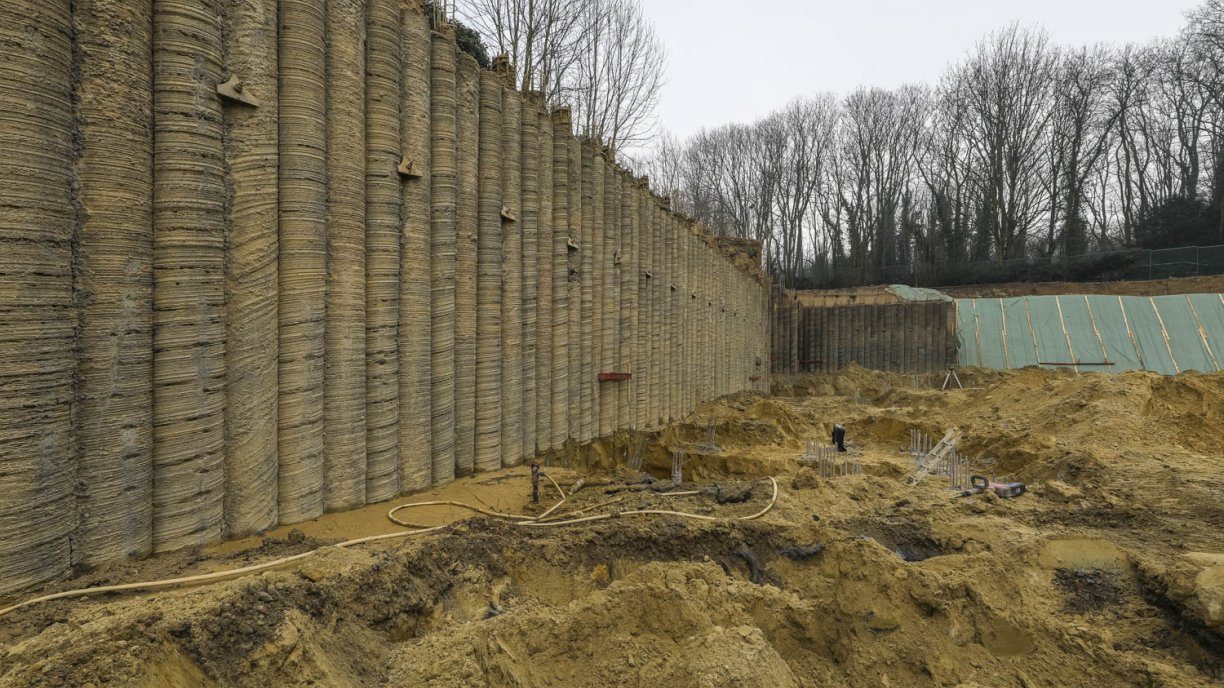
Learn more Pile wall (secant or tangent)
Continuous row of bored concrete piles — secant (temporary water cut-off) or tangent (above the water table).
Learn more Soil-mix wall (CSM panels or columns)
In-situ soil-cement wall built up from panels (CSM) or overlapping columns.
Learn more