VHP — jet grouting (Very High Pressure)
VHP — jet grouting (Very High Pressure)
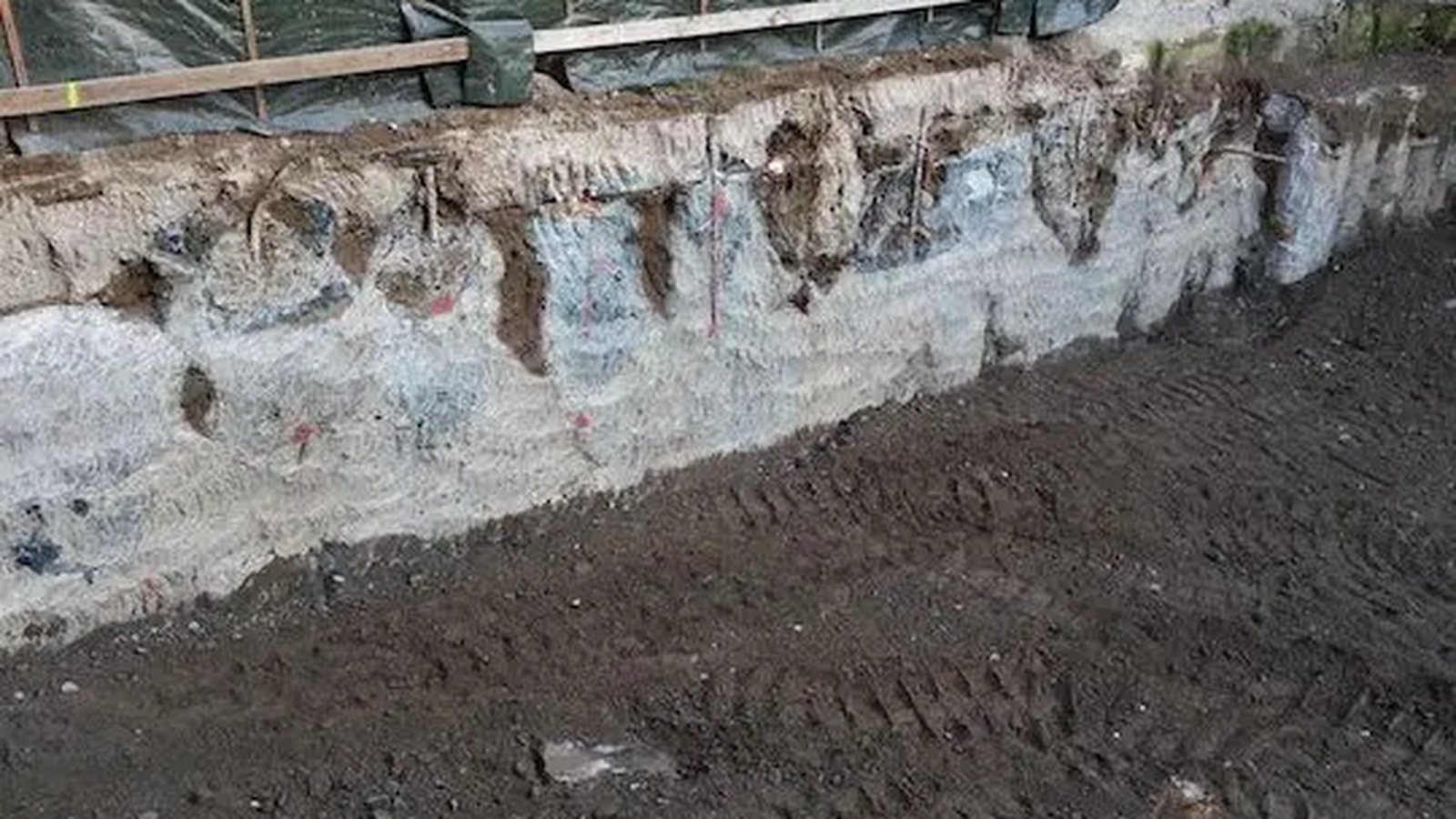
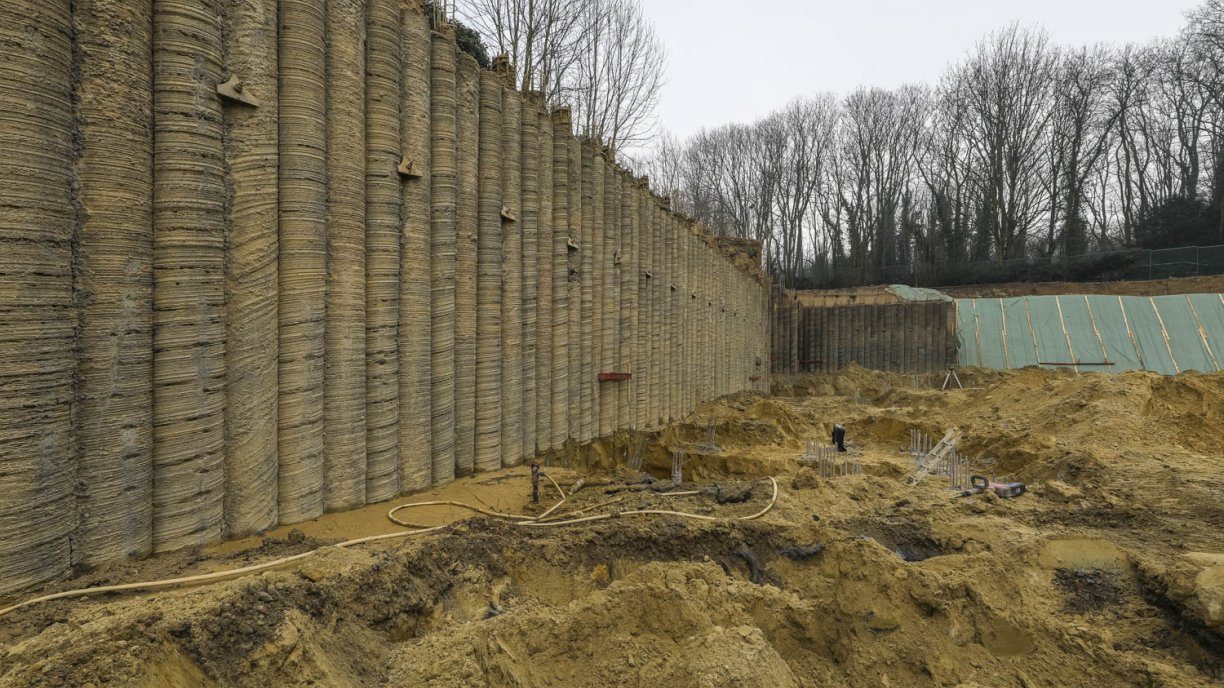
VHP jet grouting (Very High Pressure) injects cement grout into the ground at high pressure, blending the soil into a soilcrete column. These columns can be combined into a wall or used as a load-bearing pile. The slender tooling and near-vibrationless process make VHP especially well suited to underpinning beneath existing foundations and to sites with restricted access.
When to use
- Urban sites with limited headroom or access — feasible with mini-rigs
- Underpinning beneath existing foundations or slabs
- Adjacent to monuments or vibration-sensitive structures (near-vibrationless installation)
- Heterogeneous soils (sand, silt, clay) where mechanical soil mixing struggles
- Combined retention and hydraulic cut-off (VHP wall)
- Bored piles with central reinforcement where conventional piles cannot be installed (VHP pile)
What we deliver
- Sizing of column diameter, spacing and reinforcement (steel tube, GEWI bar or HEB profile)
- Capacity (VHP pile) or earth- and water-pressure (VHP wall) analysis to Eurocode 7
- Grout mix specification, target strength (UCS) and permeability
- Layout, cross-sections and full calculation report
Technical notes
- Near-vibrationless — suitable right next to historical or weakly founded buildings
- Soilcrete strength is highly soil-dependent (typically 15–35 MPa UCS in sand, 4–15 MPa in clay) — quality control through wet-grab and UCS testing is essential
- Permeability of a well-executed wall typically 10⁻⁸ to 10⁻⁹ m/s — usable as a cut-off screen
- On request we supervise pile load tests and on-site quality monitoring
Related services 
Soldier pile wall (Berlin wall)
Vertical steel soldier piles with timber, concrete or steel lagging between them.
Learn more Pile wall (secant or tangent)
Continuous row of bored concrete piles — secant (temporary water cut-off) or tangent (above the water table).
Learn more Soil-mix wall (CSM panels or columns)
In-situ soil-cement wall built up from panels (CSM) or overlapping columns.
Learn more